
Pickaway County Bench Warrants
Bench warrants issued in Pickaway County come from judges at the Court of Common Pleas in Circleville. These warrants are tied to missed court dates, probation violations, and failure to follow court orders. If you want to search for a bench warrant in Pickaway County, the Clerk of Courts and the Sheriff's Office both handle records connected to these cases. The county has some online tools and also offers phone and in-person access to warrant information. Knowing which office to contact first can save you a lot of time and get you the details you need faster.
Pickaway County Overview
Pickaway County Clerk Warrant Records
The Pickaway County Clerk of Courts manages all records for the Court of Common Pleas. This includes the General Division, Domestic Relations Division, and Probate/Juvenile Division. The office sits in the Pickaway County Courthouse in Circleville. When a judge signs a bench warrant, the Clerk adds it to the case file. You can call the Clerk to ask about a specific case or check if a warrant is on file. The courthouse address is in Circleville, and the Clerk handles both walk-in and phone requests.
Ohio law under ORC Section 2941.46 allows public access to most court records. That includes bench warrants. Staff at the Clerk's Office can search by name or case number. If you visit in person, you can look at the case file directly. For people who cannot get to the courthouse, a phone call is the next best thing.
The Pickaway County government website provides contact information and office details. Here is a look at the site.

This page gives you the basics you need to start a records search in Pickaway County.
Pickaway County Sheriff and Bench Warrants
The Pickaway County Sheriff's Office enforces bench warrants once they come from a judge. Deputies serve the warrants and work to locate people who have missed their court obligations. The Sheriff's Office is in Circleville and can be reached by phone.
Bench warrants from Pickaway County go into the Law Enforcement Automated Data System. That makes them visible to any officer in Ohio during a stop. The Ohio Attorney General's Office provides tools that help law enforcement track warrants across county lines. The Sheriff coordinates with other agencies when someone with a Pickaway County warrant gets picked up elsewhere in the state.
The Sheriff's Office website also has information about their warrant operations. Below is a look at their site.
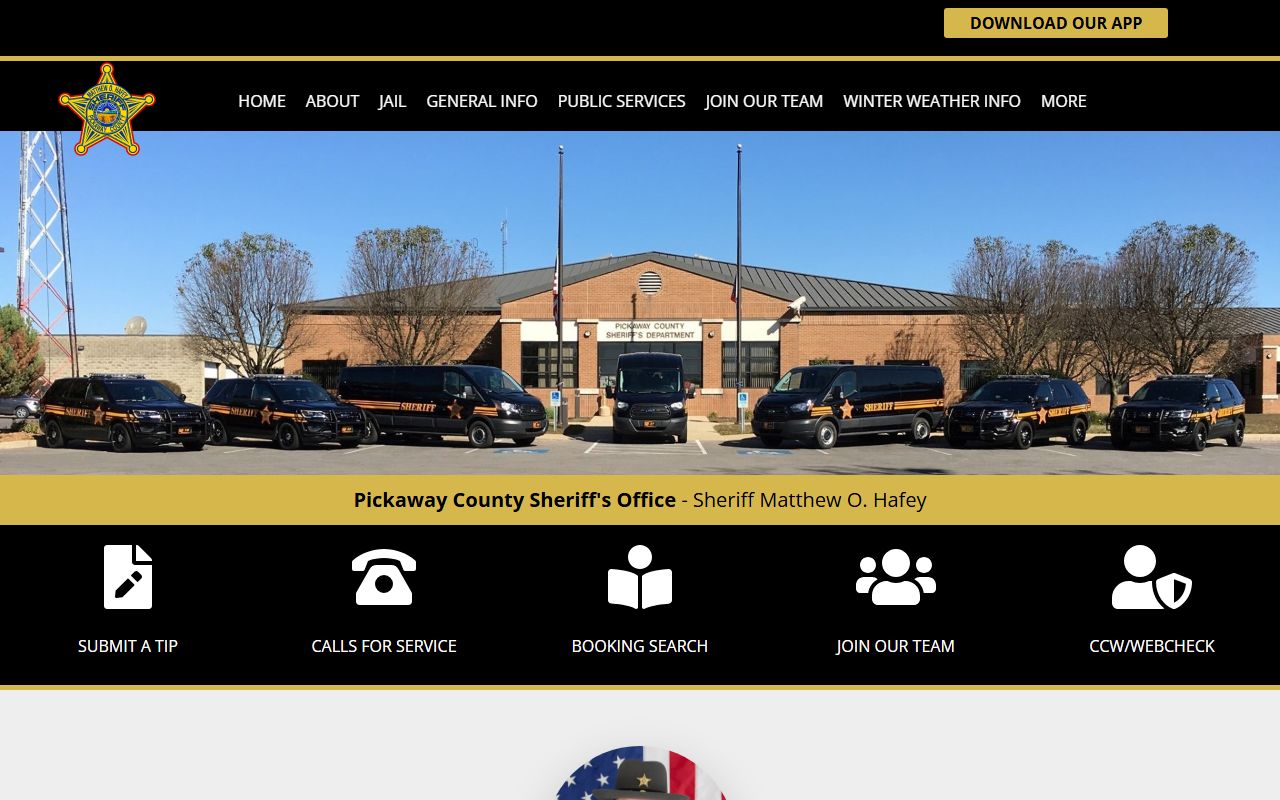
Check the Sheriff's site for general info, but for detailed warrant lookups, the Clerk of Courts is typically the better resource.
Note: Pickaway County bench warrants stay active in the system until a judge recalls or quashes them.
How Pickaway County Bench Warrants Get Issued
A bench warrant in Pickaway County starts with a missed obligation. The judge at the Court of Common Pleas can issue a warrant the same day someone fails to appear for a hearing. That warrant goes into the court file and gets sent to the Sheriff for enforcement. Failure to appear is the top reason these warrants get issued here.
Other causes include probation violations, unpaid fines, and ignoring court orders. The Ohio Supreme Court sets the rules for how warrants must be issued. Each one needs the person's name, the charge or violation, and the judge's signature. Once signed, the warrant becomes part of the permanent court record. It stays active until the judge takes it back. There is no time limit on a bench warrant in Ohio, so it can sit in the system for years if the person never deals with it.
After the warrant is issued, law enforcement can act on it at any time. A routine stop in Pickaway County or anywhere else in Ohio can lead to an arrest.
Consequences of a Pickaway County Warrant
An active bench warrant from Pickaway County reaches further than you might think. The Ohio Bureau of Motor Vehicles can put a hold on your license if the court flags your record. That means no license renewal and no vehicle registration until the warrant is cleared. The hold stays until the court tells the BMV the matter is resolved.
Ohio warrants also go into the National Crime Information Center database. Any agency in the country can see it. Getting stopped in another state with a Pickaway County warrant on file can lead to problems. Depending on the severity, you could be held or given a notice to appear. Bench warrants can surface during background checks as well, which adds another layer of complications.
Legal Resources for Pickaway County
Ohio Legal Help has free guides for people with bench warrants. The site explains how to file a motion to quash a warrant and what to expect if you go back to court. These tools work for anyone in Pickaway County dealing with an active warrant. The step-by-step format makes it easy to follow even without a lawyer.
The Ohio State Bar Association offers a lawyer referral service. A defense attorney can file a motion on your behalf and may get a new hearing date without you going through an arrest. The Ohio Courts Network helps you find court contact info across the state. The Ohio Department of Rehabilitation and Correction has an offender search covering state prisons, which is useful if you need to check if someone with a warrant is in custody.
Clearing a Pickaway County Bench Warrant
To clear a bench warrant in Pickaway County, you have to appear before the judge who issued it. Contact the Clerk of Courts to find out your case number and the details of the warrant. A lawyer can do this for you and file a motion to recall the warrant before you show up.
When you appear, the judge will decide the next steps. The warrant may be recalled and a new hearing set. Bail could be required depending on the charge. Each case is handled on its own facts. Pickaway County courts are more likely to view voluntary appearances favorably. Handling the warrant on your own timeline beats being caught off guard during a traffic stop or other encounter. The Ohio Offender Search can help you check if someone is in state custody already.
Nearby Counties
These counties are near Pickaway County. A bench warrant stays with the court that issued it, so confirm the court location before reaching out.