
Montgomery County Bench Warrants
Bench warrants in Montgomery County are issued when someone fails to show up for a scheduled court date or does not follow a judge's order. Courts in and around Dayton handle thousands of these cases each year through both the Municipal Court and the Court of Common Pleas. If you need to search for an active bench warrant in Montgomery County, the Clerk of Courts runs a free online tool called the PRO System that covers traffic, criminal, civil, and domestic relations cases. You can also call the clerk's office or go to the courthouse in person to ask about a specific case. Knowing where to look and what steps to take can save you a lot of time and stress.
Montgomery County Overview
Montgomery County Warrant Search Online
The best way to look up bench warrants in Montgomery County is through the Public Records Online system, also known as the PRO System. The Montgomery County Clerk of Courts built and runs this tool. It is free to use. You do not need an account. The PRO System covers traffic cases, criminal cases, and civil cases filed in the Montgomery County Municipal Court. It also includes criminal and civil filings from the General Division of Common Pleas Court, Domestic Relations cases, and appeals filed with the Second District Court of Appeals. That is a wide net for one search tool.
To search, go to the PRO System and type in a name or case number. Results will show you party names, case type, and docket entries. If a bench warrant has been issued in a case, you can often see it in the docket. Keep in mind that documents are not posted right away. New filings take about 48 to 72 hours to show up in the system after they are filed with the clerk. So if a warrant was just issued, it might not be in the PRO System yet.
The Clerk of Courts has rules for using the PRO System. You cannot try to build your own search queries or bypass the database. Doing so can get you blocked from the system with no warning. The data is meant for looking up case info one at a time, not for bulk downloads or data mining.
The Montgomery County Clerk of Courts PRO System is where most people start when they want to check for bench warrants in Dayton and the rest of the county.
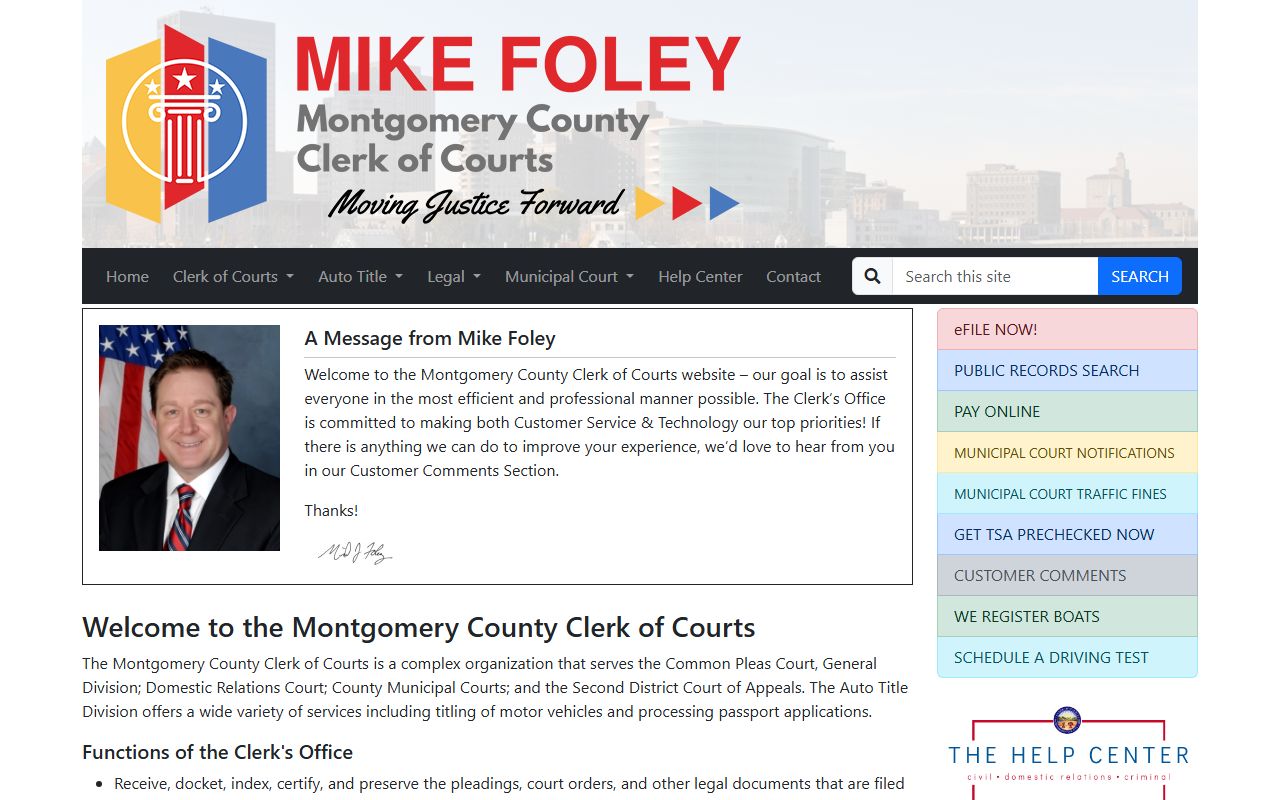
The PRO System home page gives you direct access to search all case types handled by the Montgomery County courts, including those with active bench warrants.
Getting Copies of Montgomery County Court Records
Sometimes you need more than what the online search shows. You might want a printed copy of a court order or a certified document for legal use. The Montgomery County Clerk of Courts handles all copy requests. There are three types of copies you can get, and each one costs a different amount.
Regular copies are the cheapest option at $0.10 per page. These are plain copies with no official markings. Certified copies cost $1.00 per page. A deputy clerk signs them and stamps them with the court seal to verify they are true copies of the original. Authenticated copies run $5.00 each. These carry a judge's signature on top of the clerk's stamp and seal. Most people who need proof of a bench warrant or court order for another agency will want a certified copy at a minimum. The Montgomery County records request page has full details on how to ask for copies.
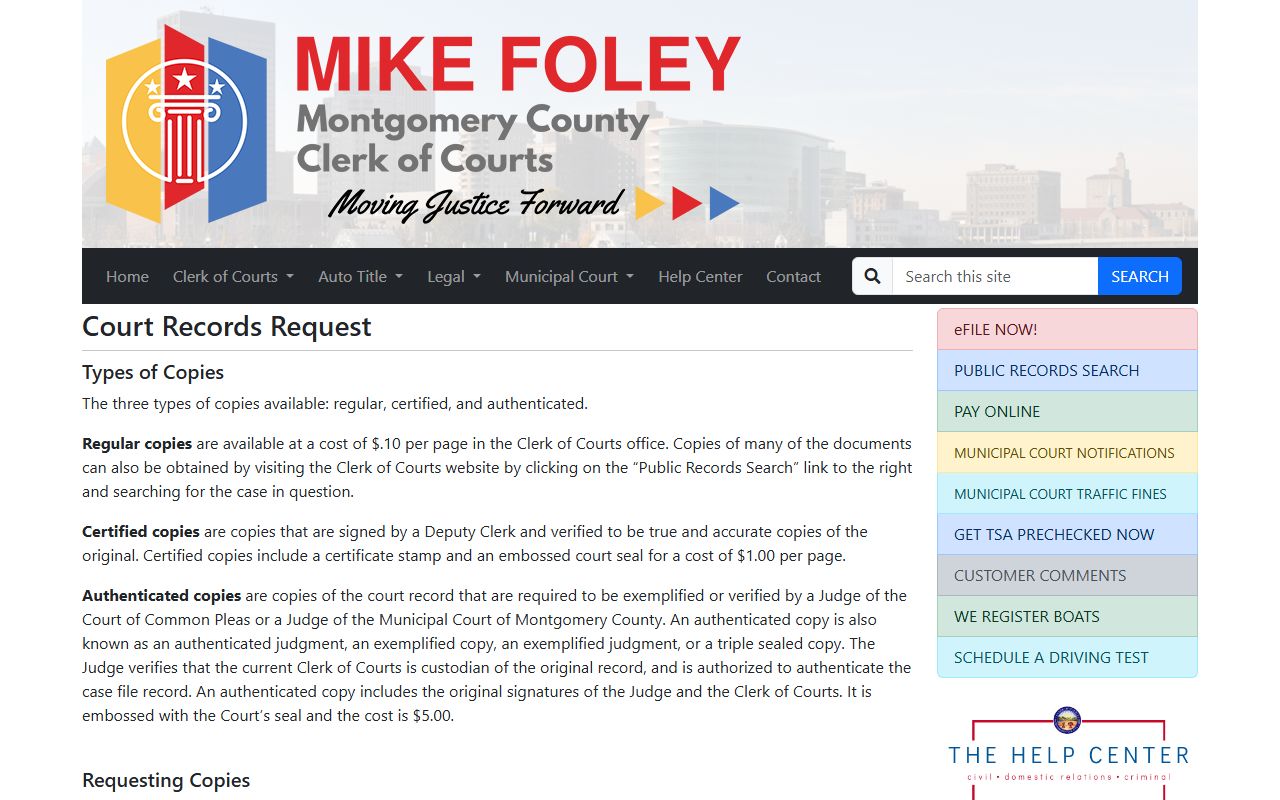
This page walks you through the steps to request copies of court records, including bench warrant filings and case documents from Montgomery County courts.
You can get copies in person at the Court of Common Pleas Records Section. That office is at 41 N. Perry Street, Room 104, Dayton, Ohio 45422. You can also email your request to recordssection@mcohio.org. The clerk requires payment up front before they will make copies. If you are mailing a request, include a self-addressed stamped envelope with your check or money order. The Municipal Court divisions also accept credit cards, which makes it a bit easier if you go in person.
Note: The clerk's office does not do research for you or provide data programming, so you need to know the case number or have enough details for them to find the file.
Montgomery County Courts and Bench Warrants
Montgomery County has several court locations where bench warrants get issued and processed. The main courthouse is in downtown Dayton, but two satellite divisions serve other parts of the county. Each location handles its own caseload. If you have a bench warrant in Montgomery County, you need to deal with it at the right court.
The Montgomery County Court of Common Pleas sits at 41 N. Perry Street in Dayton. This is the general trial court. It handles felony criminal cases, major civil disputes, and domestic relations matters. Hours are Monday through Friday, 8:30 AM to 4:30 PM. The phone number is 937-225-6000. Bench warrants from Common Pleas cases tend to be more serious since they often involve felony charges or violations of court orders in custody and support cases. If you have a warrant from this court, showing up on your own is almost always better than waiting to be picked up.
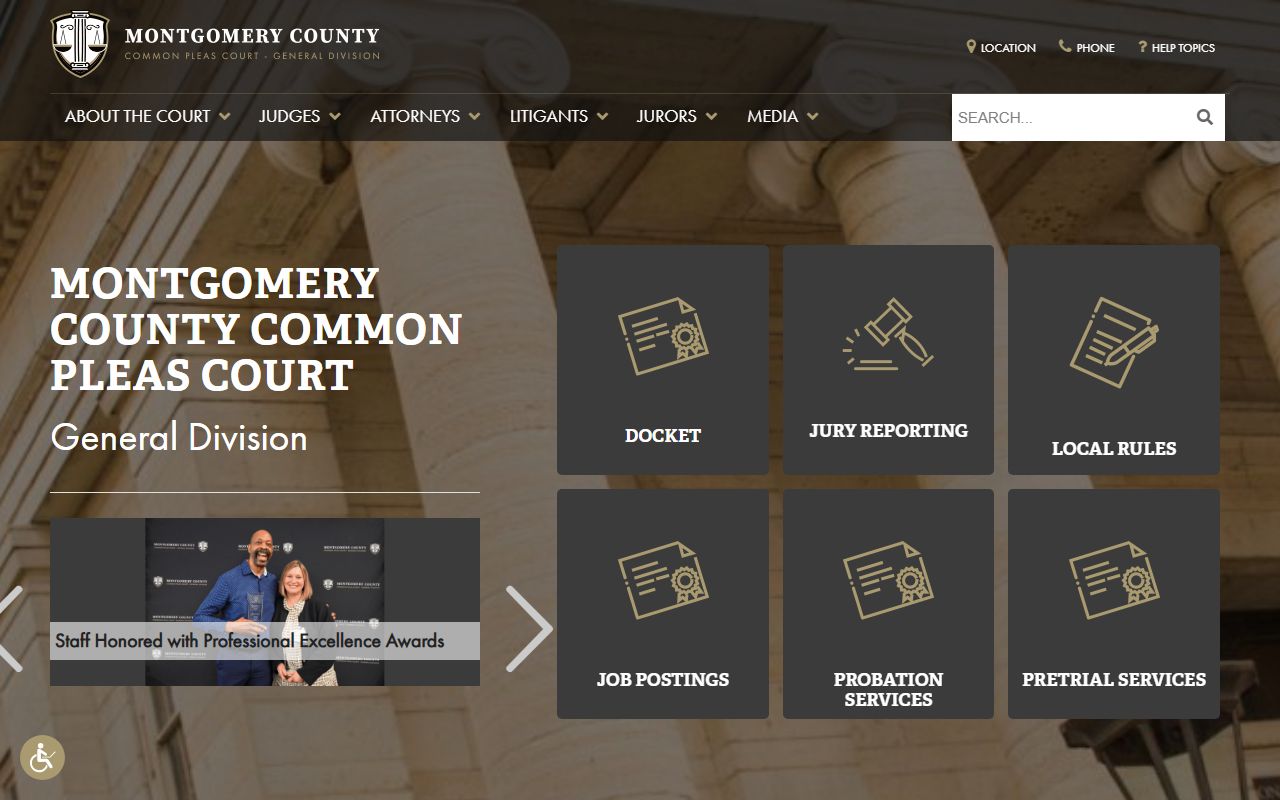
The Common Pleas Court website provides docket info, local rules, and contact details for people dealing with bench warrants and other court matters in Montgomery County.
| Court | Montgomery County Court of Common Pleas |
|---|---|
| Address |
Montgomery County Courts Building 41 N. Perry Street Dayton, OH 45422 |
| Phone | 937-225-6000 |
| Hours | Monday through Friday, 8:30 AM to 4:30 PM |
| Website | montcourt.oh.gov |
The Municipal Court of Montgomery County has three divisions. The main division operates out of Dayton. The Eastern Division is at 6111 Taylorsville Road in Huber Heights, Ohio 45424, and you can reach them at (937) 496-7231. The Western Division is at 875 E Main Street in Trotwood, Ohio 45426, with a phone number of (937) 687-9099. Municipal courts handle misdemeanors, traffic offenses, and preliminary hearings on felony cases. Most bench warrants for things like missed court dates on traffic tickets or minor criminal charges come from these courts.
Bench Warrant Laws in Montgomery County
Bench warrants in Montgomery County follow Ohio state law. When a judge issues a bench warrant, it means the court is ordering law enforcement to bring that person before the judge. The most common reason is failure to appear. If you skip a court date, the judge can issue a bench warrant that same day. Ohio courts also issue bench warrants for violating probation terms, not paying fines, or ignoring other court orders.
Under Ohio Rules of Criminal Procedure Rule 4, warrants must be based on probable cause and must include the defendant's name, the offense, and the issuing court. A bench warrant stays active until law enforcement serves it or the court recalls it. There is no expiration date. You could have a warrant from five years ago that is still in the system. Montgomery County courts use the PRO System to track these cases, and law enforcement can see active warrants through their own databases too.
The Ohio Revised Code Section 2941.46 gives peace officers the power to arrest someone without a warrant if there are reasonable grounds to believe a parole or probation condition has been violated. This applies to situations involving firearms restrictions, geographic boundaries, and no-contact orders. While this is separate from a bench warrant, it shows how Ohio law gives courts and law enforcement several ways to bring people back before a judge.
Note: A bench warrant does not go away on its own, so the sooner you deal with it the fewer problems you will have down the road.
What Happens with a Montgomery County Bench Warrant
Having an active bench warrant in Montgomery County creates real problems. You can be stopped and arrested at any time. A routine traffic stop in Dayton or Kettering could land you in jail if the officer runs your name and finds an open warrant. It does not matter why you were pulled over. Once they see the warrant, they have to act on it.
The Ohio Bureau of Motor Vehicles also plays a part. Courts across Ohio can place warrant blocks on your driver's license through the BMV. If you have a bench warrant in Montgomery County, the court can report it to the BMV. Once that happens, you cannot renew your license or your vehicle registration until the warrant is cleared. To get the block removed, you have to go back to the court that issued the warrant, resolve the case, get paperwork showing it is cleared, and then take that to the BMV. There may be reinstatement fees on top of whatever the court requires.
Ohio's public records laws under Ohio Revised Code Chapter 149 make most warrant information available to the public. That means anyone who searches your name through the PRO System or other court records tools can see that a bench warrant was issued. Employers who run background checks through the Ohio Attorney General's Bureau of Criminal Investigation may also find this information.
Sealing Records in Montgomery County
After you resolve a bench warrant and the case is closed, you might want to get the record sealed. Montgomery County follows Ohio's sealing and expungement rules. The Montgomery County Municipal Court handles sealing requests for cases that went through that court.
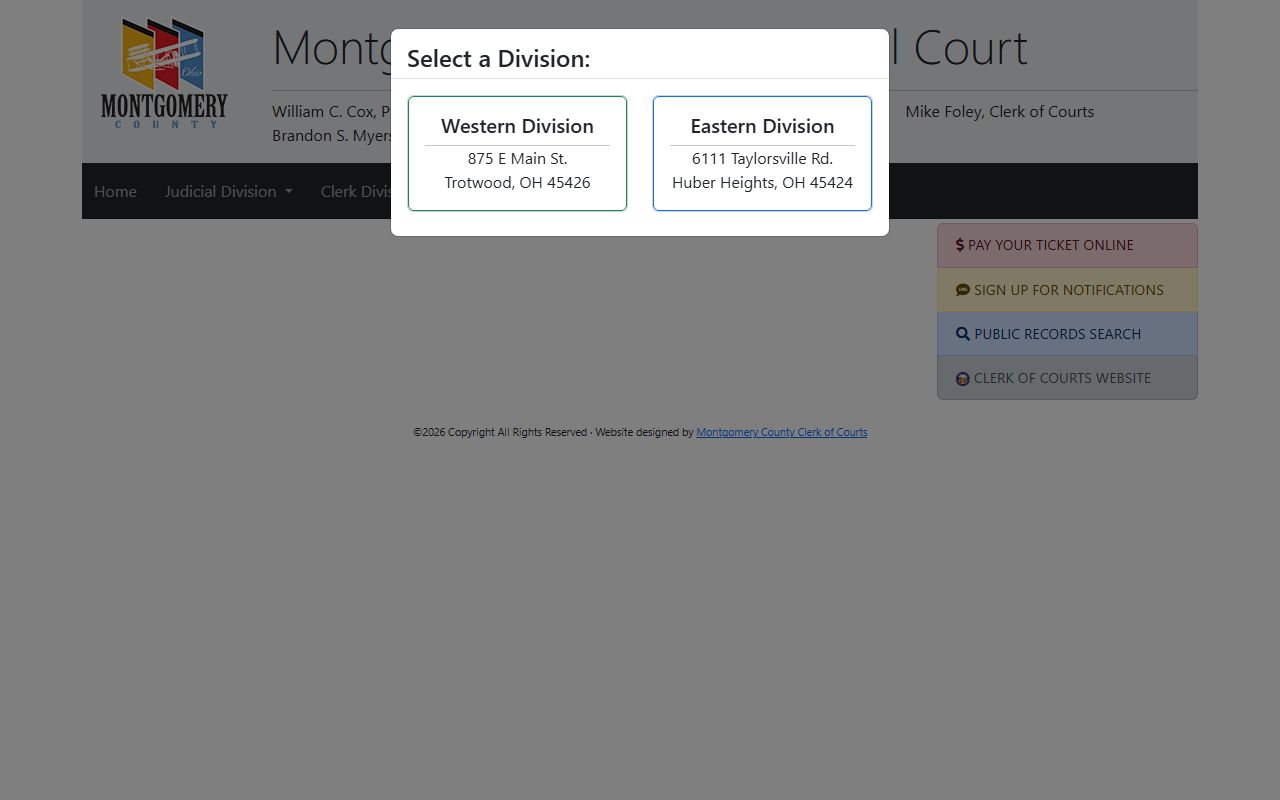
The Municipal Court FAQ page covers common questions about traffic and criminal cases, including how to file for sealing or expungement of records tied to bench warrants in Montgomery County.
If you were convicted, you can file to seal the record one year after the conviction date. If the case was dismissed, you do not have to wait the full year. You can file right after the dismissal. There is a $100 fee to file for sealing or expungement if you had a conviction. You also need to have no other violations on your record. Traffic records cannot be sealed or expunged under Ohio law, even if there was a bench warrant connected to a traffic case.
The National Expungement Database Center, known as NEDC, works with Montgomery County courts to help people through the sealing process. This partnership makes it easier to figure out which cases qualify and what forms you need. Email correspondence with the clerk's office is considered public record under Ohio law, so keep that in mind if you are asking about sensitive case details.
Resolving a Montgomery County Bench Warrant
If you find out you have a bench warrant in Montgomery County, the best move is to take care of it before law enforcement finds you. There are a few ways to handle it depending on the type of case and which court issued the warrant.
First, figure out which court holds the case. Use the PRO System at mcclerkofcourts.org to look up your name. Once you find the case, note whether it is in Municipal Court or Common Pleas. For Municipal Court cases in the eastern part of the county, the office in Huber Heights at 6111 Taylorsville Road handles those. For the western side, go to the Trotwood location at 875 E Main Street. Common Pleas cases go through the main courthouse at 41 N. Perry Street in Dayton.
You can also hire a lawyer to appear on your behalf in some situations. The Ohio Courts website provides self-help resources and forms for people who want to represent themselves. Many people with bench warrants for failure to appear find that just showing up is enough. The judge may set a new court date, impose a fine, or deal with the case right then. Waiting only makes things worse. The Ohio Attorney General's office also coordinates the Fugitive Safe Surrender program, which gives people with warrants a safe place to turn themselves in and get connected with resources.
- Look up your case on the PRO System first
- Note the case number and which court division holds it
- Contact the clerk's office to ask about next steps
- Show up in person or through a lawyer if possible
- Bring your ID and any paperwork from the original case
Note: Resolving the warrant as soon as you can helps you avoid arrest and keeps your driving privileges from being blocked at the BMV.
Cities in Montgomery County
Montgomery County includes Dayton and several surrounding cities. All bench warrants for cases in these areas are handled by the Montgomery County courts. If you live in any of these cities, your case goes through either the Municipal Court or the Court of Common Pleas in Dayton.
Other communities in Montgomery County include Trotwood, Vandalia, Englewood, Centerville, Miamisburg, and West Carrollton. Cases from these areas also go through the Montgomery County court system, and bench warrants are tracked in the same PRO System.
Nearby Counties
These counties border Montgomery County. If you are unsure which county your case falls under, check the address where the charge was filed. Bench warrants are tied to a specific court, so you need to go to the right one.